A hallway chat

became a partnership proposal Ola wanted to build.

A B2B innovation proposal to bring the open web into India's largest ride-hailing infotainment system — carried from a single conversation through cross-cultural field research to a complete partnership pitch.

project
Firefox Lite × Ola Play
role
PM + Interaction Designer
year
JAN 2019 – FEB 2020
team
4, cross-functional
average ride
0min
long-haul trips — time users needed to fill
survey responses
0
across India, validating five hypotheses
timeline
0
months from opportunity to final pitch

A hallway chat that became a real opportunity

The project started with an informal conversation between Mozilla Taipei's VP and Ola's Business Development Head. The VP sensed a commercial opportunity and authorised me to develop it into a partnership proposal.

Ola in 2019 was India's largest ride-hailing platform — 60% market share, 110+ cities, 100M+ app installs. Its in-car system, Ola Play, gave passengers free WiFi and control over infotainment content. But the content was thin, and that gap was the opening.

Four findings from secondary research
  • Long rides: Trips averaged 60 minutes — passengers needed more ways to fill the time
  • Office workers: The highest-frequency Ola Play users — they needed a way to keep working
  • Stale content: Ola Play's library was limited and rarely refreshed — Ola needed low-cost variety
  • Mixed hardware: Car specs varied widely — Ola needed a low-footprint partner
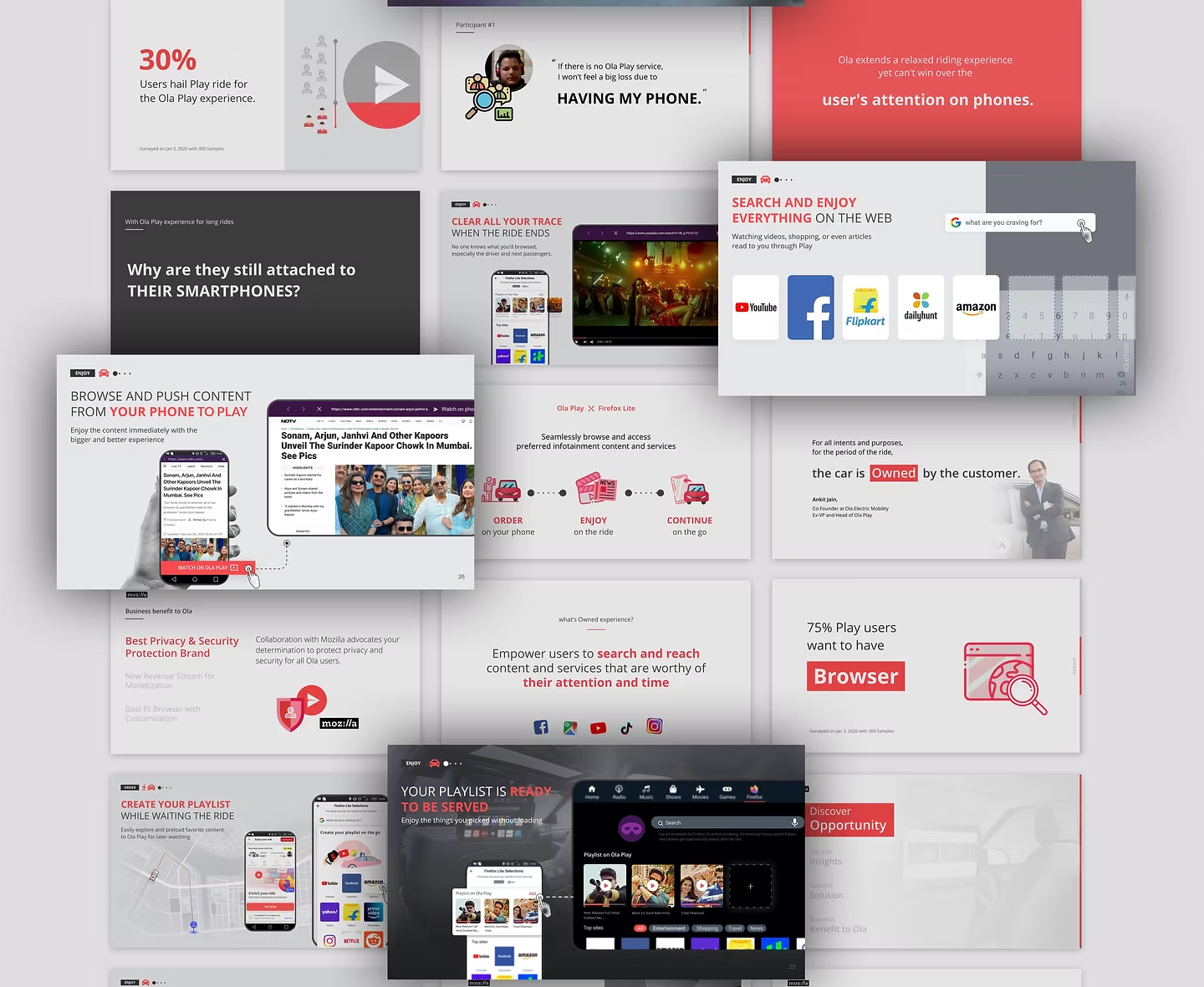
Initial pitch deck presented to Mozilla's VP

Initial pitch deck — the opportunity framed for Mozilla's VP, who approved building the core team
Field research in India to define the problem

Our BD travelled to India and worked with local colleagues to run on-site observation and in-depth interviews — while also drawing on Ola's own knowledge and data.

The research sharpened the problem statement: Ola Play offered integrated content for long rides, but it couldn't solve the core issue. The platform's library was too limited, so passengers still fell back on their own phones. The direction: let riders search and browse the open web directly inside Ola Play.

Five hypotheses to validate
  • Users were dissatisfied with Ola Play's existing content
  • Users wanted their own familiar phone content on the Ola Play screen
  • Firefox Lite's content and services would appeal to Ola Play users
  • Riders on trips over 30 minutes were more willing to use Ola Play
  • Users wanted a consistent, seamless digital experience throughout the ride

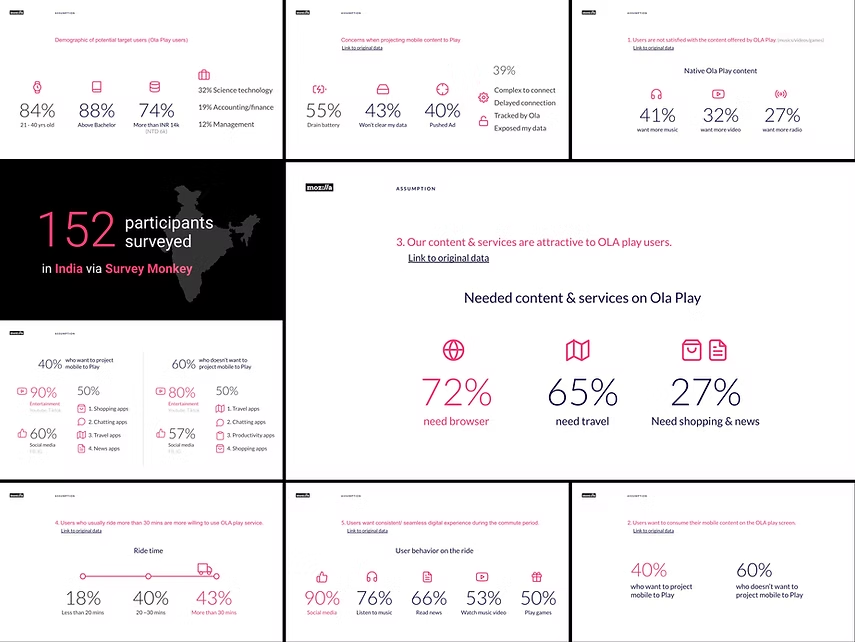
From 152 surveys to a prioritised concept

A survey of 152 respondents across India confirmed the hypotheses. I built a passenger persona as the foundation for a solution workshop, framed around a How Might We question.

The workshop ran two rounds of divergent brainstorming, then a risk-priority matrix to land on high-value, low-risk concepts. In parallel, I built a product canvas covering the user problem, competitive analysis, go-to-market plan, and business case.

How might we integrate a mobile browser — access to any online content and web app — into the native Ola Play experience, to meet what passengers actually need?

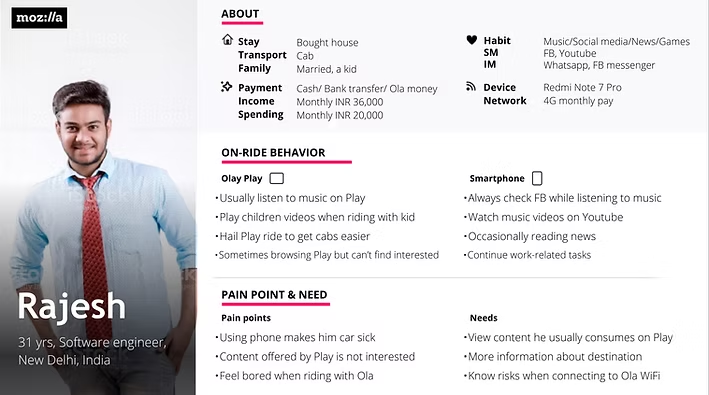
Passenger persona built from research

Passenger persona — the shared reference point for the solution workshop

Survey results from 152 respondents across India

Survey results — 152 respondents across India validated the five hypotheses

Rapid prototyping across one shared journey

With the concept validated, the team moved fast. I built a user story map covering the rider's needs across the entire journey — and the rest of the team built directly on top of it.

Team split
  • PM (me): User story map covering needs across the full ride journey
  • UX Designer: Experience wireframes built from the story map
  • Visual Designer: High-fidelity prototype
  • Researcher: Test plan and participant recruitment

We worked together in Figma, multiple people on the same prototype at once. After interviews, we consolidated the key insights, cut features that didn't earn their place, and iterated the design.

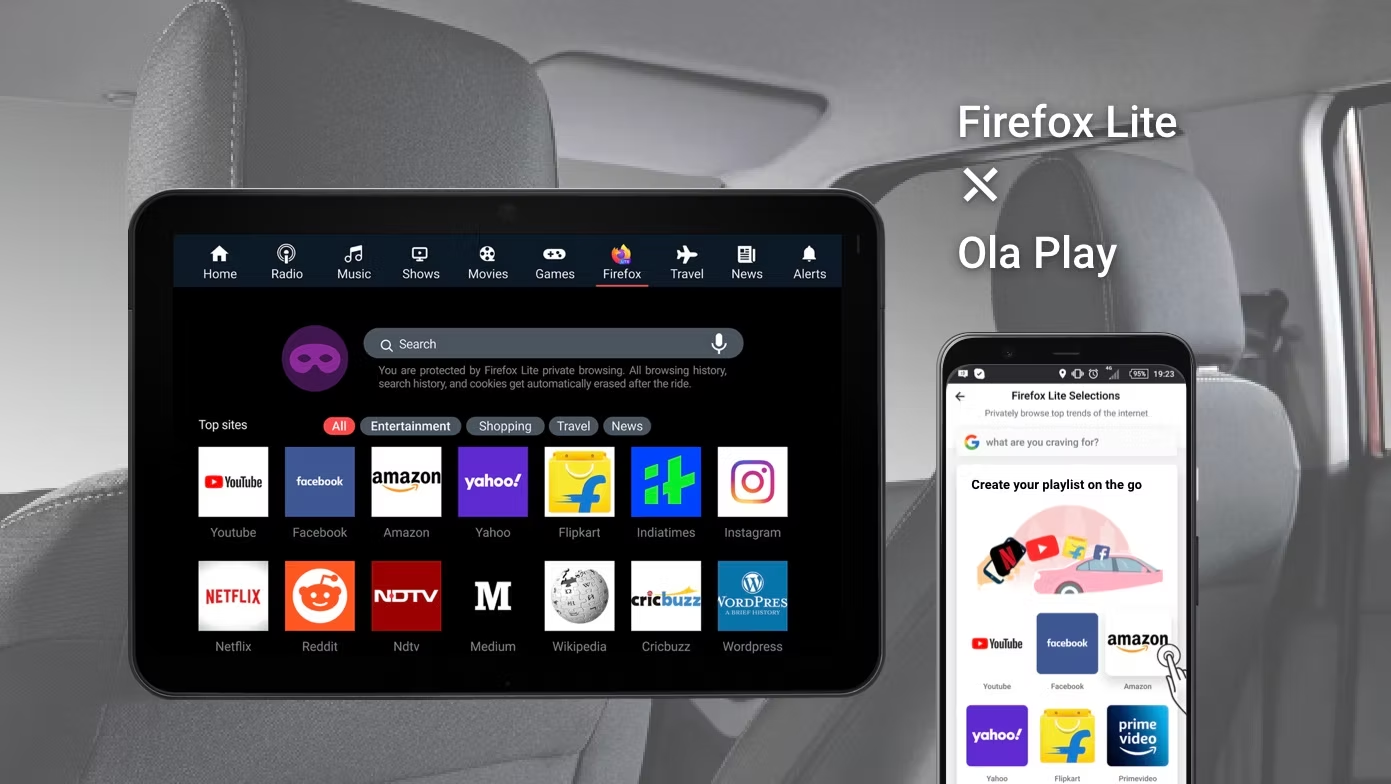
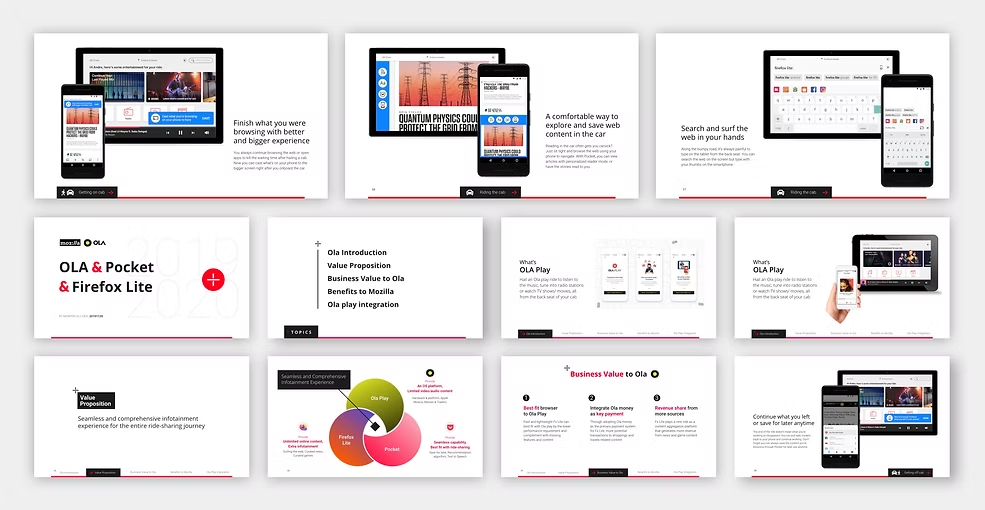
Firefox Lite × Ola Play — the in-car browsing concept

A full proposal — and a door that closed

I consolidated the market insight, user needs, and business model into a complete partnership proposal and pitched it to the Ola team. Ola responded with strong positive feedback and expressed interest in taking the partnership further.

Then COVID-19 hit. Ola's business stalled entirely, and the partnership opportunity closed with it. The proposal never became a product — but the work stands on its own.

The integrated Firefox Lite and Ola Play vision

The integrated vision — Firefox Lite browsing inside the Ola Play in-car experience

It didn't ship. But it proved I could take a hallway conversation and turn it into a partnership proposal a market leader wanted to build.

Process is the deliverable when the product isn't

Zero-to-one is a repeatable skill

Starting from an informal conversation, I identified the opportunity, assembled a cross-functional team, and ran a complete double-diamond process end to end. The outcome was uncertain from day one — that's the nature of innovation work — but the process held, and it's a process I can run again.

Cross-cultural research takes humility

Researching in India, a market I didn't live in, meant leaning hard on local colleagues and resisting the urge to assume. The 152-person survey and field interviews weren't just validation — they were how I avoided designing for a user I imagined rather than the one who actually existed.